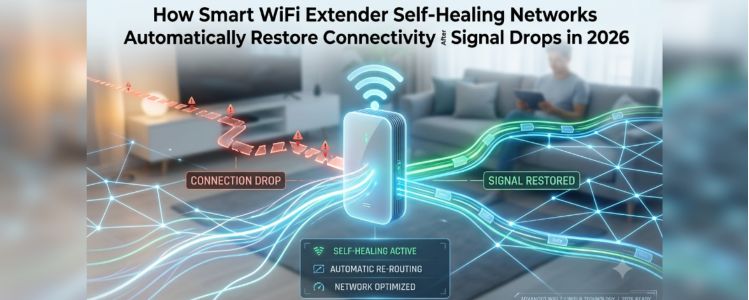
Modern WiFi extenders are becoming smarter with self-healing network technology that automatically detects connection problems and restores wireless communication without requiring manual intervention. Whether caused by temporary signal interference, router reboots, or network congestion, self-healing features help minimize downtime and maintain stable internet access. After completing a proper mywifiext setup and accessing the extender through 192.168.1.250 when needed, users can enjoy a more reliable home network throughout 2026.
Table of Contents
- What is a self-healing network?
- How self-healing technology works
- Common causes of signal drops
- Benefits for smart homes
- Optimizing your WiFi extender
- Troubleshooting tips
- FAQs
What Is a Self-Healing WiFi Network?
A self-healing WiFi network is designed to monitor its own performance continuously.
When it detects connection issues, the extender automatically attempts to restore communication without requiring users to restart or reconfigure the device.
Depending on the model, the extender may:
- Re-establish its router connection
- Switch to a stronger wireless channel
- Reconnect to the best available signal
- Optimize wireless performance
- Resume normal operation automatically
This intelligent automation reduces interruptions during everyday internet use.
Why Signal Drops Occur
Wireless networks experience occasional interruptions for many reasons.
Common causes include:
- Temporary router reboots
- Power fluctuations
- Wireless interference
- Firmware updates
- Network congestion
- Device roaming
- Environmental obstacles
Instead of remaining disconnected, modern self-healing extenders quickly recover from many of these situations.
How Self-Healing Technology Works
Self-healing systems constantly monitor:
- Signal strength
- Network quality
- Router availability
- Channel interference
- Connected device status
If the connection weakens or fails, the extender automatically searches for the most stable communication path before reconnecting.
Many users may never notice that recovery has occurred.
Better Performance for Smart Homes
Today’s homes depend on uninterrupted internet connectivity.
Connected devices often include:
- Smart TVs
- Security cameras
- Video doorbells
- Smart speakers
- Home automation hubs
- Smart lighting
- Voice assistants
Self-healing technology helps keep these devices connected even when temporary network disruptions occur.
Reduced Downtime for Remote Work
Reliable connectivity is essential for:
- Video conferencing
- Cloud applications
- Remote desktops
- Online collaboration
- File sharing
Automatic recovery minimizes interruptions during important meetings and helps maintain productivity throughout the workday.
Faster Recovery After Router Restarts
Many households occasionally restart their router for maintenance or firmware updates. Traditional extenders may require additional time to reconnect.
Self-healing extenders automatically:
- Detect the router’s return
- Reconnect without user input
- Restore internet access
- Resume normal network operation
This reduces waiting time after maintenance.
Complete Your MyWiFiExt Setup Correctly
A successful mywifiext setup helps ensure advanced features like self-healing operate efficiently.
During installation:
- Connect the extender to the primary router.
- Install the latest firmware.
- Configure wireless settings.
- Verify signal strength.
- Position the extender appropriately.
A proper setup provides the foundation for long-term network reliability.
Access Your Extender Through 192.168.1.250
Many Netgear extenders can be managed using 192.168.1.250.
This local management interface allows users to:
- Review connection status
- Update firmware
- Modify wireless settings
- Restart the extender
- Monitor connected devices
- Perform diagnostics
Checking these settings periodically helps maintain peak performance.
Tips for Improving Network Stability
To maximize self-healing effectiveness:
- Position the extender midway between the router and weak coverage areas.
- Keep firmware updated.
- Reduce interference from nearby electronics.
- Avoid placing the extender behind large metal objects.
- Restart networking equipment occasionally.
- Secure the network with strong passwords.
These practices support more reliable wireless performance.
Future of Self-Healing Networks
Networking technology continues becoming more intelligent.
Future WiFi extenders may include:
- AI-powered network optimization
- Predictive fault detection
- Automatic channel selection
- Smarter device prioritization
- Cloud-assisted diagnostics
These innovations will make wireless networks even more resilient and easier to manage.
Final Thoughts
Self-healing networking is transforming how WiFi extenders maintain reliable connectivity in modern homes. By automatically detecting signal interruptions and restoring communication without user intervention, these intelligent systems reduce downtime and improve the overall wireless experience for streaming, remote work, gaming, and smart home devices.
Completing a proper mywifiext setup ensures your extender is configured for optimal performance, while accessing the management interface through 192.168.1.250 allows you to monitor network health, install firmware updates, and troubleshoot issues when necessary. As home networks continue supporting more connected devices throughout 2026, self-healing technology will play an increasingly important role in delivering stable, uninterrupted internet access.
FAQs
1. What is a self-healing WiFi network?
A self-healing WiFi network automatically detects connection problems and restores wireless communication without requiring manual user intervention.
2. Why does my WiFi extender lose connection?
Signal loss may result from router restarts, wireless interference, firmware updates, power interruptions, or temporary network congestion.
3. Why is mywifiext setup important?
A proper mywifiext setup ensures the extender is correctly configured, allowing advanced features like self-healing and automatic reconnection to function effectively.
4. What is 192.168.1.250 used for?
192.168.1.250 is a local management address commonly used to access compatible Netgear WiFi extenders for configuration, diagnostics, firmware updates, and performance monitoring.
5. Can self-healing technology improve smart home reliability?
Yes. Self-healing features automatically restore connectivity after temporary signal interruptions, helping smart home devices remain connected and operational with minimal downtime.