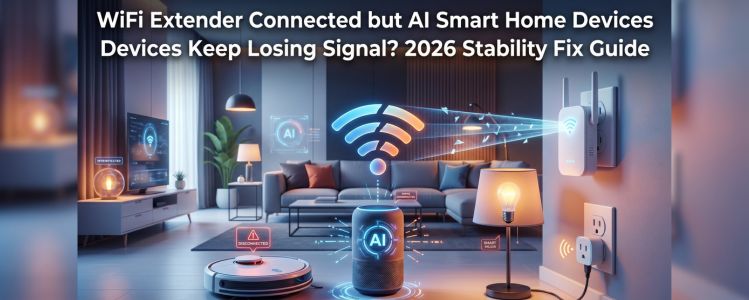
Smart homes are becoming more advanced in 2026, with AI-powered devices now controlling lighting, security, climate systems, voice assistants, appliances, and entertainment systems. However, many users face a frustrating issue where their WiFi extender appears fully connected, but smart home devices constantly lose signal or disconnect randomly.
Homeowners often notice:
- Smart speakers going offline
- Security cameras disconnecting
- AI assistants responding slowly
- Smart lights becoming unreachable
- Delayed automation routines
- Devices reconnecting repeatedly
In many cases, the issue is not internet speed itself but WiFi stability, extender placement, roaming conflicts, or network configuration problems. Fortunately, most of these issues can be fixed using proper setup optimization through mywifiext.local and IP management tools like 192.168.1.250.
This guide explains why AI smart home devices lose connection with WiFi extender and how to improve smart home stability in 2026.
Why AI Smart Home Devices Are More Sensitive to WiFi Problems
Unlike phones or laptops, smart home devices remain connected continuously. AI-powered devices rely on:
- Constant cloud communication
- Real-time automation
- Background syncing
- Low-power wireless chips
- Continuous network authentication
Even minor WiFi interruptions can cause:
- Signal loss
- Delayed responses
- Offline notifications
- Failed automations
This makes smart devices far more sensitive to unstable extender connections.
Common Symptoms of Extender Stability Problems
Users commonly report:
- Smart cameras disconnecting randomly
- Voice assistants losing connection
- Smart thermostats appearing offline
- Delayed notifications
- Slow smart home responses
- Failed automation triggers
These problems often indicate:
- Weak signal quality
- IP conflicts
- Roaming instability
- WiFi interference
Why Smart Home Problems Are Increasing in 2026
Modern homes now contain:
- WiFi 7 devices
- AI assistants
- Security systems
- Streaming devices
- Smart appliances
- IoT sensors
Many households now support 40–100 connected devices simultaneously.
This heavy network traffic can overwhelm poorly optimized extenders, especially older hardware models.
Fix 1: Improve Extender Placement
Poor extender placement is the most common cause of smart home instability.
Best Placement Tips
Position the extender:
- Halfway between router and smart devices
- In open elevated spaces
- Away from thick walls
- Away from metal objects
Avoid Placement Near:
- Microwaves
- Bluetooth hubs
- Electrical panels
- Large appliances
Signal obstruction weakens extender performance significantly.
Fix 2: Access Extender Settings Through Mywifiext.local
Open:
- mywifiext.local
Inside the dashboard:
- Check signal quality
- Review connected devices
- Monitor extender health
- Verify firmware status
- Check band settings
The management portal helps identify weak connections and overloaded networks.
Fix 3: Assign Stable IP Addresses Using 192.168.1.250
Many AI devices disconnect because their IP addresses change frequently. Access:
- 192.168.1.250
Then configure:
- Reserved IP assignments
- DHCP optimization
- Static device addressing
Static IP reservations improve:
- Device reliability
- Cloud communication
- Smart automation stability
This is especially helpful for:
- Cameras
- Smart hubs
- AI assistants
- Doorbells
Fix 4: Separate 2.4GHz and 5GHz Networks
Most smart home devices still rely heavily on:
- 2.4GHz WiFi
Combined smart-band systems may confuse IoT devices.
Best Solution
Create separate WiFi names for:
- 2.4GHz smart devices
- 5GHz high-speed devices
Benefits include:
- Improved stability
- Better smart device compatibility
- Reduced roaming conflicts
Fix 5: Reduce Network Congestion
Heavy traffic affects AI smart devices quickly.
Common Sources of Congestion
- 4K streaming
- Cloud backups
- Online gaming
- Video conferencing
- Large downloads
Reducing network congestion improves smart home responsiveness dramatically.
Fix 6: Update Router and Extender Firmware
Outdated firmware often causes:
- IoT compatibility problems
- Roaming issues
- Random disconnects
- Device authentication failures
Firmware updates improve:
- Security
- Device handling
- Mesh communication
- Stability optimization
Always keep:
- Router firmware updated
- Extender firmware updated
Fix 7: Disable Aggressive Smart Roaming Features
Some extenders constantly move devices between:
- Router and extender
- 2.4GHz and 5GHz bands
AI smart home devices often struggle with aggressive roaming systems.
Symptoms Include:
- Frequent reconnects
- Devices appearing offline
- Delayed responses
Reducing roaming aggressiveness often improves stability.
Fix 8: Reduce Wireless Interference
Modern homes contain many interference sources.
Common Interference Sources
- Smart TVs
- Bluetooth speakers
- Wireless cameras
- Microwave ovens
- Neighboring WiFi networks
Even small changes in extender position can improve smart device connectivity dramatically.
Fix 9: Restart the Entire Smart Home Network
Temporary memory conflicts are common in busy smart homes.
Recommended Restart Order
- Turn off extender
- Restart router
- Wait 2 minutes
- Restart extender
- Reconnect smart devices
This refreshes:
- DHCP assignments
- WiFi authentication
- Cloud communication
Fix 10: Upgrade Older Extenders
Older extenders may struggle with:
- AI smart homes
- WiFi 6 devices
- WiFi 7 traffic
- Heavy IoT environments
Modern extenders support:
- Better device management
- Improved roaming
- Smarter traffic balancing
- Lower latency
Upgrading hardware may solve persistent stability issues completely.
Why AI Devices Need Stable Connections More Than Fast Speeds
Most smart devices use very little bandwidth. However, they require:
- Continuous communication
- Stable latency
- Reliable authentication
- Constant cloud access
Even brief signal interruptions can trigger:
- Offline errors
- Missed automations
- Delayed notifications
Stability matters more than raw speed for smart homes.
Why Extenders Sometimes Confuse Smart Devices
Extenders create additional network layers that may introduce:
- Duplicate SSIDs
- Roaming delays
- Authentication conflicts
- IP assignment problems
Simple IoT devices often struggle with advanced networking behavior.
Best Practices for AI Smart Home Stability
- Keep Smart Devices on 2.4GHz: Longer range improves reliability.
- Reboot Network Monthly: Routine restarts improve performance.
- Avoid Overloading Extenders: Too many devices reduce stability.
- Keep Firmware Updated: Updates improve smart device compatibility.
Why Mesh Systems Are Becoming More Popular
Many homeowners are replacing traditional extenders with mesh systems because they offer:
- Smarter roaming
- Better AI device handling
- Improved coverage
- Stronger network stability
Mesh systems are often more reliable for large smart homes in 2026.
Common User Mistakes
Avoid these setup errors:
- Extender placed too far away
- Using outdated firmware
- Mixing old and new WiFi standards heavily
- Overloading the network
- Ignoring IP conflicts
Small setup mistakes can create major smart home instability.
Final Thoughts
If your WiFi extender stays connected but AI smart home devices keep losing signal, the issue is usually related to weak placement, roaming conflicts, network congestion, outdated firmware, or IP assignment problems.
By optimizing settings through mywifiext.local, configuring stable IP assignments using 192.168.1.250, improving extender placement, and reducing interference, users can dramatically improve smart home reliability in 2026.
With proper optimization, AI-powered smart homes can maintain stable connectivity, faster automation response times, and reliable device performance throughout even the busiest modern networks.