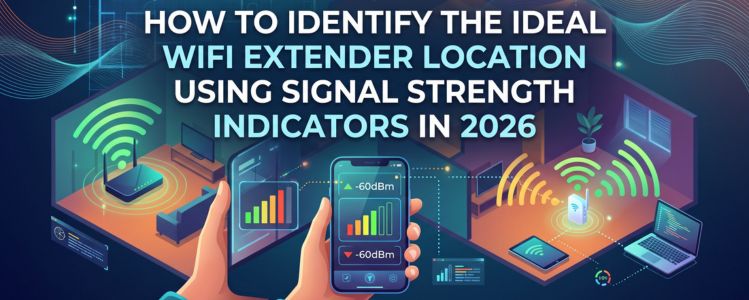
Placing a WiFi extender in the right location is essential for maximizing wireless coverage and maintaining high internet speeds. Signal strength indicators built into modern extenders help users determine whether the device is receiving a strong enough connection from the router. During installation, accessing mywifiext.local or mywifiext.net allows users to complete setup, monitor signal quality, and optimize extender placement for the best possible performance.
Table of Contents
- Why extender placement matters
- Understanding signal strength indicators
- Choosing the best installation location
- Using setup portals for optimization
- Common placement mistakes
- Tips for long-term WiFi performance
- FAQs
Why Placement Is So Important
Many people believe a WiFi extender should simply be placed inside the room with weak coverage.
In reality, this often produces disappointing results. A WiFi extender does not generate a new internet connection-it amplifies the signal it receives from the primary router.
If the incoming signal is weak, the extended signal will also be weak. Proper placement ensures the extender receives a strong signal before rebroadcasting it throughout your home.
Understanding Signal Strength Indicators
Most modern WiFi extenders include LED signal indicators that display the quality of the connection between the extender and the main router.
Although indicator colors vary slightly by model, they generally work as follows:
Green or Blue
- Strong connection
- Excellent placement
- Maximum performance
Amber or Yellow
- Fair connection
- Acceptable performance
- Slight repositioning may improve speeds
Red
- Weak connection
- Poor placement
- Extender should be moved closer to the router
These indicators simplify installation without requiring specialized networking knowledge.
Find the “Middle Ground”
The ideal location is typically halfway between the router and the area with weak WiFi coverage.
This position allows the extender to:
- Receive a strong wireless signal
- Expand coverage effectively
- Maintain higher data speeds
- Reduce latency
- Improve overall reliability
Avoid placing the extender directly inside a dead zone, as it cannot amplify a signal it barely receives.
Obstacles That Affect Signal Strength
Wireless signals weaken when they encounter physical barriers. Common obstacles include:
- Concrete walls
- Brick construction
- Metal doors
- Large appliances
- Mirrors
- Water pipes
Whenever possible, position the extender in an open location with minimal obstructions between it and the router.
Complete Configuration Through MyWiFiExt.local
Most compatible Netgear extenders can be configured through mywifiext.local during the installation process.
The setup interface allows users to:
- Connect the extender to the router
- Configure wireless settings
- Check signal strength
- Update firmware
- Verify successful installation
Using the setup wizard helps ensure the extender is configured correctly from the start.
Access Management Through MyWiFiExt.net
Some users may access their extender using mywifiext.net, depending on their device and network configuration.
The management portal enables users to:
- Review connection status
- Modify network settings
- Change passwords
- Install firmware updates
- Troubleshoot connectivity issues
Regularly checking these settings helps maintain optimal wireless performance.
Test Coverage After Installation
After positioning the extender, walk through your home while testing WiFi performance.
Pay attention to:
- Download speeds
- Video streaming quality
- Video conference stability
- Smart home responsiveness
- Signal consistency
If weak spots remain, adjust the extender slightly and repeat the test.
Even moving the device a few feet can noticeably improve coverage.
Common Placement Mistakes
Many installation problems result from avoidable mistakes.
Avoid placing the extender:
- Behind televisions
- Inside cabinets
- Near microwave ovens
- Close to cordless phone bases
- Beside large metal objects
These obstacles interfere with wireless signals and reduce overall performance.
Optimize Your Entire Network
Extender placement works best when combined with proper router optimization.
Helpful practices include:
- Keeping router firmware updated
- Restarting networking equipment periodically
- Reducing unnecessary connected devices
- Selecting less congested WiFi channels
- Using WPA3 security when supported
A well-maintained network delivers more reliable performance throughout the home.
Smart Homes Need Strong Coverage
Modern homes often contain dozens of connected devices, including:
- Smart TVs
- Security cameras
- Voice assistants
- Gaming consoles
- Smart thermostats
- Video doorbells
- Smartphones
- Tablets
Proper extender placement ensures these devices maintain stable connections regardless of where they are located.
Final Thoughts
Choosing the correct location for a WiFi extender is one of the most important factors influencing wireless performance. Signal strength indicators provide valuable guidance by showing whether the extender is receiving a strong enough connection from the primary router. Installing the device approximately halfway between the router and the weak coverage area usually produces the best results.
Completing the installation through mywifiext.local or mywifiext.net, monitoring signal quality, and avoiding common placement mistakes help maximize coverage throughout the home. With proper positioning and regular maintenance, homeowners can enjoy faster speeds, stronger connections, and reliable WiFi for work, streaming, gaming, and smart home devices throughout 2026.
FAQs
1. Where should I place my WiFi extender?
The best location is approximately halfway between your router and the area with weak WiFi coverage while ensuring the extender still receives a strong signal.
2. What do signal strength indicators mean?
Green or blue usually indicates an excellent connection, yellow or amber indicates a fair connection, and red typically signals weak placement requiring repositioning.
3. What is mywifiext.local used for?
mywifiext.local is a local web address used to configure compatible Netgear WiFi extenders during setup and installation.
4. What is mywifiext.net?
mywifiext.net is another setup and management portal used to configure, monitor, and troubleshoot compatible Netgear WiFi extenders.
5. Can moving the extender improve internet speed?
Yes. Even a small change in placement can significantly improve signal quality, coverage, and overall wireless performance.