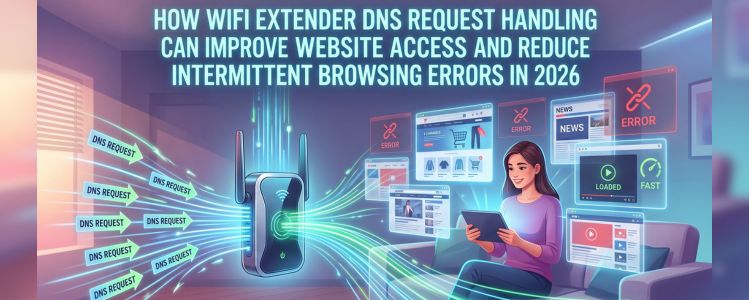
A reliable internet connection depends on more than strong WiFi signal strength. DNS request handling also plays an important role in how quickly devices locate websites and online services. During mywifiext setup, users configure their WiFi extender to communicate correctly with the existing network, while the 192.168.1.250 address may be used to access the extender’s local configuration interface on supported Netgear extender models. Understanding how DNS requests move through an extended network can help reduce intermittent browsing problems and improve overall website accessibility in 2026.
What Is DNS Request Handling?
DNS, or Domain Name System, translates website names into IP addresses that networking devices can understand. When a user enters a website address into a browser, the device generally sends a DNS request to determine where that website is hosted.
The request may pass through:
- A WiFi extender
- The primary router
- A DNS resolver
- The internet service provider’s network
If DNS communication is delayed or interrupted, a device may remain connected to WiFi while websites fail to load correctly.
Why DNS Problems Can Affect Extended WiFi Networks
A WiFi extender creates an additional connection point between wireless devices and the primary router. If communication between these devices is unstable, DNS requests can experience delays or failures.
Common symptoms include:
- Websites loading slowly
- Occasional “server not found” messages
- Browsing interruptions
- Some websites working while others fail
- Long delays before pages begin loading
- Repeated browser refreshes
These issues can sometimes appear random because DNS requests may succeed on one attempt and fail on another.
How DNS Requests Travel Through a WiFi Extender
When a device connected to an extender requests a website, the request normally travels through the extender toward the primary router and then to the configured DNS service.
A simplified process looks like this:
Device → WiFi Extender → Router → DNS Resolver → Website
The response then travels back through the network to the requesting device. Proper communication at every stage is important. A weak extender-to-router connection, incorrect network configuration, or DNS-related issue can interrupt this process.
The Role of mywifiext Setup in Network Configuration
During mywifiext setup, users configure supported extender settings so the device can communicate with the existing router and provide extended wireless coverage.
Correct configuration can help ensure that:
- The extender communicates properly with the router
- Connected devices receive appropriate network information
- Internet traffic follows the intended network path
- Devices can reach external services more consistently
Users should follow the configuration instructions specific to their extender model because available settings can differ between devices and firmware versions.
Accessing Extender Settings Through 192.168.1.250
On supported Netgear WiFi extenders, 192.168.1.250 can be used as a local address for accessing the extender’s configuration interface. Depending on the model and network configuration, users may access the local setup interface to review available networking settings.
These settings may help users examine:
- Connection status
- Network configuration
- Firmware information
- Wireless settings
- Device connectivity
- Advanced network options
The exact interface and available controls vary by extender model, firmware, and operating mode.
How DNS Configuration Can Reduce Browsing Errors
A properly functioning DNS path allows devices to translate domain names efficiently. When DNS communication is stable, users can generally access websites without repeated lookup failures.
Network administrators and advanced users may review DNS-related settings when troubleshooting intermittent browsing problems.
Potential areas to examine include:
- Router DNS configuration
- Extender operating mode
- DHCP behavior
- Network address assignment
- DNS server responsiveness
- Firmware compatibility
However, DNS settings should not be changed randomly. Incorrect configuration can create additional connectivity problems.
Why DHCP and DNS Work Together
DHCP and DNS perform different but related functions. DHCP typically provides devices with network information such as:
- IP address
- Subnet information
- Default gateway
- DNS server information
DNS then helps devices translate domain names into IP addresses. If DHCP information is incorrect or inconsistent, devices may receive unsuitable DNS information. This can result in browsing problems even when the WiFi signal appears strong.
Identifying DNS-Related Browsing Problems
Not every browsing problem is caused by DNS. Users can perform basic checks to determine whether the problem is related to the network.
For example, check whether:
- Multiple devices experience the same issue
- Only websites fail while other internet services work
- The problem occurs only through the extender
- Websites work normally when connected directly to the router
- Restarting the extender temporarily fixes the problem
If devices connected directly to the router browse normally but devices connected through the extender repeatedly experience lookup failures, the extended network path deserves closer examination.
Firmware Can Affect Network Reliability
Extender firmware controls many networking functions. Manufacturers periodically release firmware updates that may address bugs, improve compatibility, and enhance security.
Before troubleshooting complex DNS behavior, users should verify that the extender is running firmware appropriate for its model. Firmware updates should always follow the manufacturer’s instructions. Installing incompatible firmware can cause additional problems.
Placement Still Matters
DNS handling cannot compensate for an unstable wireless connection between the extender and router. If the extender is placed too far from the router, packets can be lost or delayed before DNS responses reach connected devices.
A better placement strategy generally involves positioning the extender where it can maintain a reliable connection to the main router while still providing useful coverage to the target area.
Best Practices for More Reliable Browsing
Users can follow several practical steps to improve network reliability:
- Keep the extender within a suitable range of the main router.
- Complete the correct mywifiext setup process for the specific model.
- Check the extender’s connection status regularly.
- Keep firmware updated according to manufacturer guidance.
- Avoid unnecessary changes to DNS or DHCP settings.
- Restart networking equipment when temporary connection problems occur.
- Compare performance between direct-router and extender connections.
- Check whether multiple devices experience the same browsing issue.
These steps can help isolate whether the problem originates from WiFi coverage, DNS resolution, router configuration, or the internet connection itself.
Why DNS Awareness Matters in 2026
Modern households increasingly depend on cloud applications, streaming platforms, smart-home devices, online learning, remote work, and web-based services. As the number of connected devices increases, reliable name resolution becomes an important part of the overall browsing experience.
Understanding the relationship between DNS, DHCP, routers, and WiFi extenders allows users to troubleshoot intermittent website-access problems more systematically instead of assuming every issue is caused by weak signal strength.
Final Thoughts
DNS request handling is an often-overlooked part of reliable internet browsing. A WiFi extender may provide excellent wireless coverage, but devices still depend on stable communication with the router and DNS infrastructure to access websites consistently. During mywifiext setup, correct network configuration can help establish a dependable connection between the extender and the existing network. On supported models, 192.168.1.250 may provide access to the local extender configuration interface for reviewing available settings.
By combining appropriate extender placement, correct configuration, firmware maintenance, and systematic troubleshooting, users can reduce intermittent browsing errors and maintain a more dependable extended WiFi network in 2026.
FAQs
1. What does DNS do on a WiFi network?
DNS translates website domain names into IP addresses so connected devices can locate online services.
2. Can a WiFi extender cause DNS problems?
An extender can contribute to connectivity or configuration problems that affect DNS communication, although DNS failures can also originate from the router, DNS provider, or internet connection.
3. What is 192.168.1.250 used for?
On supported Netgear extender models, 192.168.1.250 may be used as a local configuration address. The exact access method depends on the model and network setup.
4. Does mywifiext setup affect website loading?
Correct mywifiext setup helps establish communication between a compatible extender and the existing network. Incorrect configuration may contribute to connectivity problems.
5. Should I change my DNS server when websites fail to load?
Not necessarily. First determine whether the problem is caused by the extender, router, DNS service, WiFi connection, or internet provider before changing DNS settings.
6. Can moving the extender improve browsing?
Yes. If the extender has a weak connection to the main router, repositioning it can improve overall network stability and reduce packet loss that may interfere with browsing.