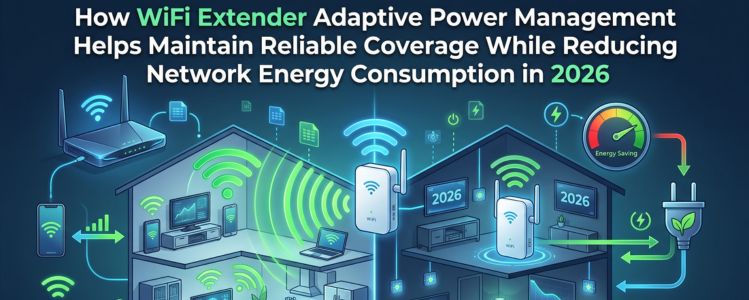
WiFi networks have become essential for modern homes, offices, and smart environments. As the number of connected devices continues to increase in 2026, homeowners are looking for networking solutions that can provide reliable coverage without unnecessarily consuming energy.
WiFi extenders play an important role by expanding wireless coverage into areas where the primary router may have difficulty delivering a strong signal. However, an extender that operates at maximum power continuously may consume more energy than necessary. Adaptive power management addresses this challenge by intelligently adjusting the extender’s operating behavior according to network demand, device activity, and wireless conditions.
For users managing a compatible Netgear extender, completing a proper mywifiext setup can help establish the foundation for reliable network performance. A correctly configured Netgear Wifi Extender Setup can also make it easier to optimize coverage and maintain efficient wireless operation.
What Is Adaptive Power Management?
Adaptive power management is an intelligent networking approach that adjusts a device’s power usage based on current operating requirements.
Instead of operating at the same level throughout the day, a compatible WiFi extender may dynamically manage its resources according to factors such as:
- Connected device activity
- Network traffic
- Signal conditions
- Wireless demand
- Operating status
- Network congestion
The objective is to maintain useful coverage while avoiding unnecessary resource consumption.
Why Energy Efficiency Matters for WiFi Networks
Home networks can operate continuously, even when users are sleeping or away from home. Smart homes may have multiple networking devices operating around the clock, including:
- Routers
- WiFi extenders
- Mesh nodes
- Security cameras
- Smart hubs
- Connected appliances
Although individual networking devices generally consume relatively small amounts of power, reducing unnecessary consumption across an entire connected environment can support more efficient network operation.
How Adaptive Power Management Supports Coverage
Energy efficiency should not come at the expense of connectivity. Adaptive power management aims to balance these two requirements by adjusting wireless resources according to current conditions.
When network demand increases, the extender can maintain the resources needed to support connected devices. During periods of lower activity, it may reduce unnecessary activity while continuing to provide essential network availability.
This approach can help maintain a practical balance between coverage and energy use.
Importance of Proper Extender Placement
Even the most advanced power management technology cannot fully compensate for poor extender placement.
An extender should generally be positioned where it can receive a reliable signal from the main router while still reaching the area that needs additional coverage.
Avoid placing the extender:
- Inside cabinets
- Behind large appliances
- Near thick walls
- In enclosed spaces
- Next to major sources of wireless interference
Strategic placement can help the extender operate more efficiently because it does not have to compensate for unnecessarily poor signal conditions.
Why Mywifiext Setup Matters
A proper mywifiext setup helps users configure their compatible extender and establish communication with the existing wireless network.
During setup, users typically need to consider:
- Existing WiFi network details
- Extender placement
- Network name
- Wireless security
- Firmware
- Connected devices
Correct configuration provides a foundation for stable wireless performance.
Netgear Wifi Extender Setup and Network Efficiency
A successful Netgear Wifi Extender Setup involves more than simply connecting the extender to a power outlet.
Users should ensure that the extender:
- Connects to the correct router
- Receives a suitable wireless signal
- Uses updated firmware
- Is positioned appropriately
- Provides coverage to the intended area
Correct setup can help prevent unnecessary retransmissions and unstable connections, both of which can reduce network efficiency.
Reducing Unnecessary Wireless Activity
A busy wireless network may generate more traffic than necessary due to repeated transmissions, weak connections, and interference.
Adaptive network technologies can help manage resources more efficiently by responding to changing conditions.
Potential benefits include:
- More efficient wireless operation
- Reduced unnecessary activity
- Better device connectivity
- Improved network responsiveness
- More consistent coverage
Actual power-saving behavior depends on the extender model and its supported features.
Supporting Smart Home Devices
Smart homes can contain many devices that require intermittent connectivity rather than continuous high-bandwidth performance.
Examples include:
- Smart lights
- Smart thermostats
- Smart plugs
- Door sensors
- Voice assistants
- Connected appliances
Adaptive power management can help networking equipment respond to these changing requirements instead of treating every device as if it were continuously transferring large amounts of data.
Better Performance During Peak Usage
Network demand can change significantly throughout the day. For example, a household may experience higher traffic during:
- Evening streaming
- Online gaming
- Video calls
- Remote work
- Large file transfers
During these periods, maintaining sufficient wireless resources becomes more important. Adaptive management can respond to changing network conditions while helping avoid unnecessary operation during quieter periods.
Firmware Updates and Performance
Keeping a WiFi extender’s firmware updated is an important part of network maintenance. Firmware updates may include:
- Security improvements
- Stability enhancements
- Compatibility fixes
- Performance improvements
- Feature updates
Users should check their extender manufacturer’s instructions for supported update procedures.
How Users Can Improve WiFi Efficiency
In addition to using supported adaptive technologies, homeowners can improve network efficiency by:
- Placing the extender correctly
- Removing unnecessary connected devices
- Updating firmware
- Using strong wireless security
- Avoiding excessive interference
- Monitoring network performance
- Restarting equipment when necessary
These basic practices can complement the extender’s built-in management features.
Future of Energy-Efficient Networking
Networking technology is increasingly incorporating intelligent automation.
Future WiFi devices may use:
- AI-powered energy optimization
- Predictive traffic analysis
- Automated radio management
- Intelligent sleep modes
- Real-time device prioritization
- Self-optimizing wireless networks
These developments could allow home networking equipment to make increasingly sophisticated decisions about performance and resource consumption.
Final Thoughts
WiFi extender adaptive power management represents an important step toward more efficient wireless networks in 2026. By responding to changing traffic levels, connected devices, and network conditions, intelligent power management can help maintain reliable coverage while minimizing unnecessary network activity.
For homeowners, completing a proper mywifiext setup is an important first step toward establishing dependable extender connectivity. A correctly performed Netgear Wifi Extender Setup, combined with strategic placement, updated firmware, and good network management practices, can help users achieve more consistent whole-home coverage.
As smart homes continue adding more connected devices, energy-efficient networking will become increasingly valuable. Adaptive power management can help create a better balance between wireless reliability, network efficiency, and responsible energy consumption.
Frequently Asked Questions
1. What is adaptive power management in a WiFi extender?
Adaptive power management is a technology that can adjust networking resources according to current network activity and operating conditions, helping balance connectivity with efficient operation.
2. Can adaptive power management reduce WiFi extender energy consumption?
It can reduce unnecessary resource usage during periods of lower network demand, although the actual power-saving behavior depends on the extender model and its supported features.
3. Why is mywifiext setup important?
A proper mywifiext setup helps establish a connection between a compatible extender and the existing wireless network while allowing users to configure important network settings.
4. What should I consider during Netgear Wifi Extender Setup?
During a Netgear Wifi Extender Setup, consider extender placement, router compatibility, wireless credentials, security settings, firmware, and the areas requiring additional coverage.
5. Does extender placement affect energy efficiency?
Yes. Poor placement can result in weak communication between the router and extender, potentially causing unstable connections and repeated transmissions. Proper placement helps support efficient operation.
6. Can WiFi extenders support smart homes?
Yes. WiFi extenders can expand wireless coverage for smart home devices such as cameras, smart lights, thermostats, appliances, and connected entertainment systems, depending on network requirements and device placement.