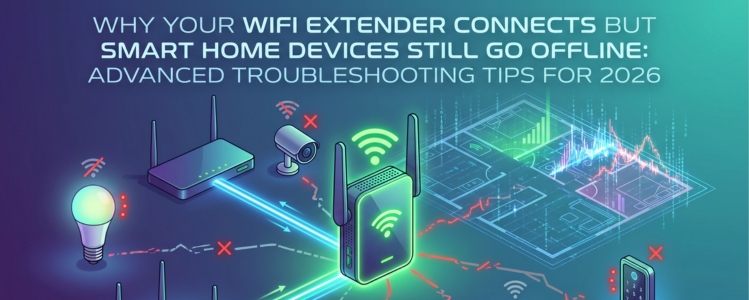
Smart homes have become the standard in 2026, with connected devices handling everything from lighting and security to entertainment and climate control. While WiFi extenders help eliminate dead zones and expand wireless coverage, many homeowners encounter a frustrating issue: the extender appears connected, yet smart home devices continue to disconnect or go offline.
This problem is usually not caused by faulty hardware. Instead, it often results from network configuration issues, poor extender placement, signal interference, or outdated firmware. By accessing your extender through mywifiext.local and reviewing network settings such as 192.168.1.250, you can diagnose and resolve many of these connectivity problems quickly.
This guide explains why smart devices disconnect even when your WiFi extender is connected and shares practical solutions to improve network stability.
Why Smart Home Devices Are Sensitive to WiFi Stability
Unlike laptops or smartphones, many smart home devices constantly exchange small amounts of data with cloud servers or mobile apps.
Examples include:
- Smart cameras
- Video doorbells
- Smart locks
- Voice assistants
- Smart plugs
- Thermostats
- Motion sensors
- Smart lighting
Even a brief interruption in WiFi connectivity can cause these devices to disconnect or become temporarily unavailable.
Verify That the Extender Is Actually Connected
The first step is confirming that the extender has successfully connected to your router.
Check for:
- Stable power light
- Strong signal indicator
- Active WiFi broadcast
- Internet connectivity
If the extender itself has lost communication with the router, connected devices will eventually go offline.
Log In Through MyWiFiExt.local
The mywifiext.local portal allows you to access your extender’s management interface.
From the dashboard, you can:
- Check connection status
- View connected devices
- Review signal strength
- Update firmware
- Modify wireless settings
Regularly reviewing these settings helps identify issues before they affect your smart home.
Check the Extender’s IP Address
Many Netgear extenders can also be managed using 192.168.1.250, depending on the network configuration.
This interface allows you to:
- Verify IP settings
- Monitor network health
- Restart the extender
- Confirm successful router communication
If the page does not load, confirm that your device is connected to the extender’s network before attempting access.
Incorrect Extender Placement Causes Weak Connections
One of the most common mistakes is placing the extender too far from the router.
Although it may still appear connected, a weak backhaul signal can cause frequent dropouts.
For best performance:
- Place the extender halfway between the router and the weak coverage area.
- Avoid installing it inside a dead zone.
- Position it in an open, elevated location.
Proper placement improves stability for all connected devices.
Firmware Updates Improve Stability
Manufacturers regularly release firmware updates that address:
- Connectivity bugs
- Performance improvements
- Security vulnerabilities
- Device compatibility
Keeping your extender updated through mywifiext.local helps ensure reliable operation with the latest smart home devices.
Minimize Wireless Interference
Signal interference remains a leading cause of intermittent disconnections.
Common interference sources include:
- Microwave ovens
- Bluetooth devices
- Cordless phones
- Thick concrete walls
- Metal cabinets
- Nearby WiFi networks
Relocating the extender away from these sources often improves network reliability.
Verify Wireless Band Compatibility
Many smart home products operate exclusively on the 2.4 GHz frequency.
If the extender is configured incorrectly, some devices may struggle to reconnect.
Review your wireless settings to ensure compatibility with all connected equipment.
Avoid Network Congestion
Modern homes frequently connect dozens of devices simultaneously.
Heavy bandwidth usage from:
- 4K or 8K streaming
- Cloud backups
- Online gaming
- Large downloads
can affect lower-priority smart home devices.
Reducing unnecessary network traffic during peak hours helps maintain stable connections.
Check DHCP and IP Address Assignments
Incorrect IP address assignments can cause devices to disconnect unexpectedly.
Verify that:
- DHCP is enabled
- IP conflicts are not occurring
- Devices receive valid network addresses
Stable IP management improves communication between the router, extender, and connected devices.
Restart Your Network Equipment
A complete network restart often resolves temporary communication problems.
Restart in this order:
- Turn off the modem.
- Restart the router.
- Restart the WiFi extender.
- Reconnect smart home devices.
This process refreshes network communication and clears temporary errors.
Secure Your Network
Unauthorized devices can consume bandwidth and reduce performance.
Improve security by:
- Using WPA3 encryption when supported
- Creating strong WiFi passwords
- Updating administrator credentials
- Removing unknown devices
A secure network is generally more reliable and performs better.
Monitor Connected Devices
Both mywifiext.local and 192.168.1.250 provide information about connected devices.
Review this list regularly to:
- Identify offline devices
- Detect unauthorized connections
- Monitor network usage
- Troubleshoot connectivity problems
Routine monitoring helps maintain consistent performance.
Expand Coverage When Necessary
Large homes with multiple floors may require additional WiFi equipment.
If dead zones persist, consider:
- Repositioning the extender
- Adding another compatible extender
- Upgrading to a mesh WiFi system
Improved coverage reduces disconnects and strengthens smart home reliability.
Signs Your Network Is Optimized
A properly configured extender should provide:
- Stable smart device connections
- Smooth video streaming
- Reliable security camera feeds
- Fast voice assistant responses
- Consistent WiFi coverage throughout the home
These improvements indicate a healthy wireless network.
Final Thoughts
A connected WiFi extender does not always guarantee reliable smart home performance. Weak placement, outdated firmware, wireless interference, IP conflicts, and network congestion can all cause connected devices to go offline even when the extender appears to be working correctly.
By accessing your extender through mywifiext.local, reviewing settings via 192.168.1.250, optimizing placement, updating firmware, and monitoring your network regularly, you can significantly improve the reliability of your smart home. With proper configuration and routine maintenance, your WiFi extender can provide stable, uninterrupted connectivity for all your smart devices throughout 2026 and beyond.