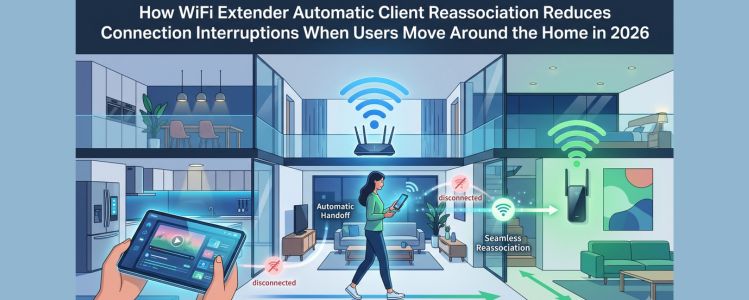
Modern homes depend on reliable WiFi more than ever. People move from room to room while using smartphones, laptops, tablets, video-calling applications, smart TVs, and other connected devices. However, moving farther away from the main router can sometimes cause weaker signals, slower performance, or temporary connection interruptions.
WiFi extenders are designed to help expand wireless coverage into areas where the main router signal is weak. In 2026, modern wireless technologies and improved network-management features are helping devices transition more efficiently between available access points.
One important concept is automatic client reassociation. This process can help a compatible device disconnect from a weaker WiFi connection and establish or maintain a connection through a stronger and more suitable access point when network conditions change.
For users completing a mywifiext setup, understanding how device reassociation and roaming behavior work can help improve the overall WiFi experience. Proper configuration through the extender management interface, including 192.168.1.250 on many supported Netgear extender setups, can also help users review important network settings.
What Is Automatic Client Reassociation?
Client reassociation refers to the process in which a wireless device establishes a connection with an available wireless access point. In a home with a router and WiFi extender, a device may have more than one available signal source.
For example, a smartphone may initially connect to the main router in the living room. As the user moves upstairs or toward another area of the house, the extender may provide a stronger signal. Automatic reassociation can help the device transition when appropriate. The exact roaming behavior depends on several factors, including:
- Device capabilities
- Router features
- Extender configuration
- WiFi standards
- Signal conditions
- Network naming and security settings
Why Connection Interruptions Happen
A common WiFi problem occurs when a device continues holding onto a weak connection even when a stronger access point is available. This situation is sometimes referred to as a “sticky client” problem.
A device may remain connected to a distant router because it has not yet determined that switching would provide a better connection. As a result, users may experience:
- Slower browsing
- Buffering
- Poor video-call quality
- Delayed application responses
- Temporary connection drops
Improved reassociation behavior can help reduce these problems in compatible network environments.
How WiFi Extenders Improve Coverage
A WiFi extender receives a wireless signal and helps extend coverage into another part of the home. This can be useful for areas such as:
- Upstairs bedrooms
- Home offices
- Garages
- Basements
- Larger living spaces
However, an extender works best when it is placed in an area where it can still receive a usable signal from the main router. Placing an extender directly inside a complete dead zone may not provide the expected results.
The Role of Mywifiext Setup
A correct mywifiext setup is important for achieving reliable extender performance. During the setup process, users generally connect the extender to the existing home network and configure the appropriate wireless settings.
Depending on the extender model, the setup process may involve:
- Connecting the extender to power
- Connecting it to the existing WiFi network
- Creating or confirming extended network settings
- Checking the connection status
- Testing coverage in different areas
The exact steps can vary by model and firmware version.
Managing the Extender Through 192.168.1.250
Many supported Netgear WiFi extenders can be accessed locally through 192.168.1.250 when the device is connected to the extender network. This local management address can provide access to the extender’s configuration interface on compatible devices.
Users may be able to review settings related to:
- Wireless configuration
- Network connection status
- Connected devices
- Firmware information
- Extender settings
If 192.168.1.250 does not open, the user should first confirm that their device is actually connected to the extender’s network.
How Reassociation Supports Moving Around the Home
Imagine starting a video call near the main router. As you walk toward another part of the house, the router signal may become weaker. If the extender provides better coverage in the new location, a compatible device may transition to the more suitable connection.
Efficient reassociation can help support activities such as:
- Video calls
- Online meetings
- Music streaming
- Mobile gaming
- Web browsing
The goal is to reduce unnecessary interruptions while the user moves through different coverage areas.
Device Roaming Depends on Compatibility
It is important to understand that a WiFi extender cannot always force every device to switch at the exact moment users expect. In many home networks, the client device itself plays a major role in deciding when to roam.
Different smartphones, laptops, and tablets may use different roaming behavior. This means that performance can vary depending on:
- Device manufacturer
- Operating system
- Wireless adapter
- WiFi generation
- Driver software
For the best experience, users should keep device software and network equipment updated.
Network Names Can Influence the Experience
Depending on the extender and configuration, users may encounter different network naming options.
Some setups use:
- Separate network names
- Extended network names
- Shared or coordinated network names
The best option depends on the capabilities of the router and extender. A more integrated network design may help compatible devices move more smoothly, while separate network names may require users to manually select the preferred connection.
Users should review the options available for their specific equipment during mywifiext setup.
Placement Still Matters
Automatic reassociation cannot compensate for poor extender placement. For better performance, the extender should generally be positioned:
- Within range of the main router
- Away from major obstructions where possible
- In a location that helps bridge the coverage gap
- Away from strong sources of wireless interference
Testing several locations can help identify a suitable position.
Reducing Interruptions During Video Calls
Video conferencing is particularly sensitive to WiFi interruptions. A weak or unstable connection may result in:
- Frozen video
- Delayed audio
- Dropped calls
- Poor call quality
Improved coverage and more effective device transitions can help reduce these problems. However, internet speed, network congestion, and the quality of the extender’s connection to the main router also affect performance.
Troubleshooting Reassociation Problems
If a device frequently disconnects or does not move to a stronger signal, users can check several areas.
Try the following:
- Restart the router and extender.
- Update supported firmware.
- Check extender placement.
- Confirm the extender has a strong connection to the router.
- Update the wireless device’s operating system or adapter drivers.
- Review network settings through 192.168.1.250, where supported.
- Test the device in different locations.
If problems continue, checking the specific router and extender model documentation may help identify compatibility limitations.
The Future of Seamless Home WiFi
Home networking technology is continuing to improve. Modern systems increasingly use intelligent features that can support:
- Better client steering
- Improved device roaming
- Signal optimization
- Network load balancing
- Automatic channel management
WiFi 6, WiFi 6E, WiFi 7, mesh systems, and newer network-management technologies are helping create more coordinated wireless environments.
Final Thoughts
Automatic client reassociation can play an important role in reducing connection interruptions when users move around a large home. By helping compatible devices transition between available wireless access points, modern WiFi systems can reduce the likelihood of devices remaining connected to unnecessarily weak signals.
A proper mywifiext setup is an important starting point for extending WiFi coverage and improving connectivity in hard-to-reach areas. Users with supported Netgear extenders may also use 192.168.1.250 to access local management settings and review their extender configuration.
For the best results, users should remember that seamless roaming depends on the combined capabilities of the router, extender, and connected devices. Proper placement, updated firmware, compatible equipment, and a strong connection between the router and extender can all help create a more reliable whole-home WiFi experience in 2026.
Frequently Asked Questions
1. What is WiFi client reassociation?
Client reassociation is the process through which a wireless device establishes or transitions its connection to an available WiFi access point.
2. Will every device automatically switch to my WiFi extender?
Not necessarily. Roaming behavior can depend on the capabilities and settings of the client device, router, and extender.
3. How can I complete mywifiext setup?
A mywifiext setup generally involves connecting the extender to your existing WiFi network and configuring it according to your specific extender model’s instructions.
4. What is 192.168.1.250?
192.168.1.250 is a local web address commonly used to access the management interface of supported Netgear WiFi extenders.
5. Why does my device stay connected to a weak signal?
Some devices may continue holding their current WiFi connection until the signal becomes sufficiently weak or their internal roaming logic determines that switching is beneficial.