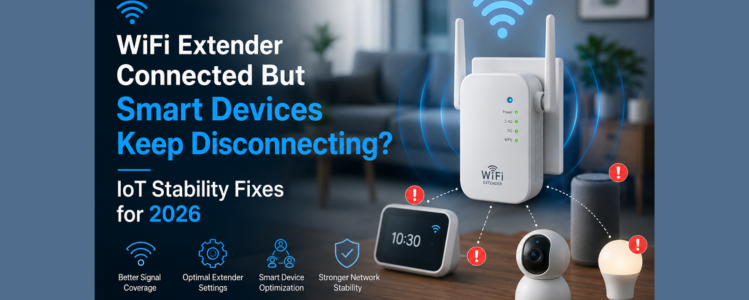
Smart homes are becoming more advanced in 2026, with households now relying on dozens of connected devices every day. From smart bulbs and cameras to thermostats, doorbells, TVs, and voice assistants, Internet of Things (IoT) devices require stable wireless connectivity to function properly. But many users face a frustrating issue where their WiFi extender appears connected normally, yet smart devices randomly disconnect throughout the day. Devices may go offline suddenly, fail to respond in apps, or reconnect repeatedly.
In many cases, the problem is related to incorrect Netgear Extender Setup, network congestion, roaming conflicts, or compatibility issues accessible through mywifiext.local.
This guide explains why smart devices disconnect from WiFi extender in 2026 and how to improve IoT stability across your entire smart home network.
Why Smart Devices Disconnect More Often Than Phones or Laptops
IoT devices behave differently from traditional devices.
Unlike phones and computers, many smart devices:
- Use lower-power WiFi chips
- Stay connected 24/7
- Operate on 2.4GHz only
- Have limited roaming support
Because of this, they are more sensitive to network instability.
Common Symptoms of IoT Disconnect Problems
You may notice:
- Smart bulbs going offline
- Cameras disconnecting randomly
- Voice assistants losing connection
- Smart plugs becoming unresponsive
- Delayed automation triggers
- Frequent reconnect notifications
These are usually signs of extender communication issues.
Why This Problem Is More Common in 2026
Modern homes now contain:
- 30+ connected devices
- Multiple streaming systems
- Security cameras
- Smart appliances
- Gaming consoles
Older extenders often struggle to manage heavy IoT traffic efficiently.
Fix 1: Optimize Netgear WiFi Extender Setup Properly
A poor Netgear Extender Setup is one of the biggest causes of IoT instability.
Best Placement Tips:
Place the extender:
- Halfway between router and devices
- In open elevated areas
- Away from thick walls
Avoid:
- Behind TVs
- Near microwaves
- Metal cabinets
- Electrical panels
Weak placement creates unstable IoT connectivity.
Fix 2: Access Settings Through mywifiext.local
Open:
- mywifiext.local
Inside the dashboard you can:
- Check signal quality
- Update firmware
- Adjust WiFi settings
- Optimize extender performance
Regular monitoring improves network reliability.
Fix 3: Use Separate 2.4GHz and 5GHz Networks
Many smart devices only support:
- 2.4GHz WiFi
When routers combine both bands automatically, some IoT devices struggle to reconnect properly.
Solution:
Separate the networks manually:
- 2.4GHz for smart devices
- 5GHz for phones, TVs, and laptops
This often improves stability immediately.
Fix 4: Reduce Network Congestion
Too many active devices can overload the extender.
Common Bandwidth Users:
- 4K streaming
- Cloud backups
- Gaming
- Video calls
Heavy traffic affects smart devices first because they use weaker wireless hardware.
Fix 5: Restart Router and Extender Regularly
Memory conflicts build up over time.
Proper Restart Order:
- Turn off extender
- Restart router
- Wait 2 minutes
- Restart extender
- Reconnect IoT devices
This refreshes network communication paths.
Fix 6: Update Extender Firmware
Outdated firmware often causes:
- Random disconnects
- Smart device incompatibility
- Roaming problems
Update Through:
- mywifiext.local
- Netgear management tools
Firmware updates improve IoT handling significantly.
Fix 7: Disable Smart Roaming Features
Some extenders automatically move devices between:
- Router and extender
- 2.4GHz and 5GHz
Many IoT devices cannot handle roaming properly.
Symptoms:
- Devices disconnect repeatedly
- Random offline notifications
- Delayed automation
Disabling smart roaming may improve stability.
Fix 8: Assign Static IP Addresses to Important Devices
Some smart devices lose connection when IP addresses change.
Best Devices for Static IPs:
- Security cameras
- Smart hubs
- Voice assistants
- Smart thermostats
Static addressing improves long-term reliability.
Fix 9: Reduce WiFi Interference
Many household devices interfere with WiFi signals.
Common Interference Sources:
- Microwave ovens
- Bluetooth devices
- Baby monitors
- Wireless speakers
Try moving the extender away from interference-heavy areas.
Fix 10: Limit Total Connected Devices
Many older extenders support fewer simultaneous devices than modern smart homes require.
Signs of Overload:
- Slow response times
- Frequent disconnects
- Delayed automation
If possible:
- Upgrade to newer WiFi 6 or WiFi 7 extenders
Why IoT Devices Are More Sensitive to Weak WiFi
Smart devices prioritize:
- Low power consumption
- Constant connectivity
This means:
- They often use weaker antennas
- They struggle with signal switching
- They disconnect more easily
Strong stable signal matters more than raw speed.
Importance of Router Compatibility
Your main router also affects extender performance.
Problems Occur When:
- Router firmware is outdated
- WiFi channels overlap
- Band steering conflicts exist
Updating both router and extender improves overall stability.
Why Smart Homes Need Better Network Planning in 2026
Today’s homes now depend on:
- Real-time automation
- Security monitoring
- Voice assistants
- Cloud-connected devices
A poorly optimized network can disrupt the entire smart home ecosystem.
Common Mistakes Users Make
Avoid these setup problems:
- Extender too far from router
- Overloaded 2.4GHz network
- Ignoring firmware updates
- Combining all devices on one band
- Using outdated extenders
Pro Tips for Better Smart Home Stability
- Keep IoT Devices on 2.4GHz: Most smart devices work more reliably there.
- Reboot Network Monthly: Routine maintenance improves performance.
- Monitor Device Count: Too many devices reduce extender stability.
- Use Updated Firmware Always: Firmware fixes many compatibility issues.
When to Upgrade Your Extender
Consider upgrading if:
- Devices disconnect daily
- Extender overheats
- Smart home contains 40+ devices
- Older WiFi standards are used
Modern mesh systems often handle IoT devices better.
Why Mesh Systems Are Replacing Traditional Extenders
Mesh WiFi systems provide:
- Better roaming
- Smarter traffic management
- Improved IoT compatibility
- Stronger whole-home coverage
Many smart homeowners are switching to mesh in 2026.
Final Thoughts
If your WiFi extender connects successfully but smart devices keep disconnecting, the issue is usually related to poor extender placement, overloaded networks, firmware problems, or incorrect IoT settings.
By improving your Netgear Extender Setup, optimizing settings through mywifiext.local, separating frequency bands, and reducing interference, you can dramatically improve smart home reliability throughout 2026.
With proper network optimization, your IoT devices can stay connected consistently while delivering smoother automation, security, and smart home performance.