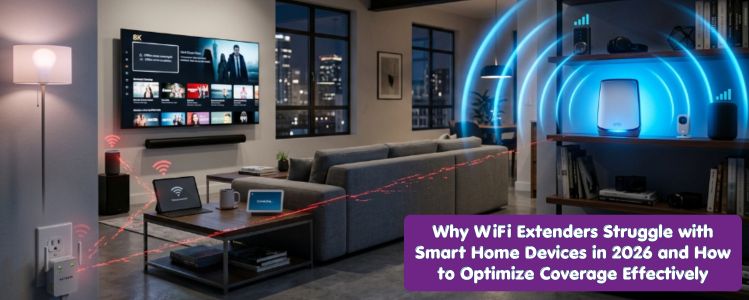
Smart homes have become more advanced than ever in 2026. From smart thermostats and security cameras to voice assistants, connected lighting systems, and automated appliances, the average household now relies on dozens of WiFi-enabled devices. While these technologies offer convenience and efficiency, they also place greater demands on home networks.
Many homeowners discover that even after installing a WiFi extender, some smart devices continue to disconnect, respond slowly, or lose connectivity altogether. These issues often occur despite strong signal indicators and successful setup processes. Understanding why WiFi extenders struggle with smart home devices-and how to optimize network coverage-can help create a more reliable and efficient connected home.
Whether you’re configuring an extender through mywifiext.net or managing network settings via 192.168.1.250, proper optimization is essential for achieving stable smart home performance.
The Growing Complexity of Smart Homes
Modern households now contain more connected devices than ever before. Common smart home devices include:
- Security cameras
- Smart TVs
- Video doorbells
- Smart locks
- Voice assistants
- Smart plugs
- Connected appliances
- Home automation hubs
Each device continuously communicates with the network, creating increased traffic and bandwidth demands.
As the number of connected devices grows, maintaining reliable wireless coverage becomes more challenging.
Why WiFi Extenders Face Smart Home Challenges
WiFi extenders are designed to expand wireless coverage by receiving and rebroadcasting signals from the main router.
While effective in many situations, extenders can encounter difficulties when managing large numbers of smart devices because of:
- Increased network traffic
- Device roaming issues
- Signal interference
- Bandwidth limitations
These factors can negatively impact smart home reliability.
Smart Devices Often Use 2.4 GHz Networks
Many smart home devices continue to rely on the 2.4 GHz frequency band.
Reasons include:
- Better range
- Lower power consumption
- Improved wall penetration
However, the 2.4 GHz spectrum is often crowded due to:
- Neighboring WiFi networks
- Bluetooth devices
- Wireless accessories
- Household electronics
This congestion can affect extender performance.
Interference Remains a Major Issue
Wireless interference continues to be one of the leading causes of connectivity problems.
Common interference sources include:
- Microwave ovens
- Cordless phones
- Bluetooth speakers
- Baby monitors
- Smart appliances
Even when an extender shows strong signal strength, interference can reduce actual network performance.
Improper Extender Placement
Placement remains one of the most common reasons for poor smart home connectivity.
Many users position extenders:
- Too far from the router
- Inside dead zones
- Behind furniture
- Near electronic equipment
For best results, the extender should be placed where it receives a strong signal from the router while still extending coverage into weak areas.
Device Roaming Problems
Some smart devices struggle when transitioning between:
- The main router
- The WiFi extender
This roaming behavior can lead to:
- Random disconnects
- Delayed responses
- Connection instability
Smart home devices often prefer maintaining a weaker connection rather than switching to a stronger signal source.
Network Congestion Is Increasing in 2026
The average connected home now supports dozens of active devices simultaneously. High-bandwidth activities such as:
- Video streaming
- Cloud backups
- Online gaming
- Video conferencing
can compete with smart home traffic.
As congestion increases, smart devices may experience slower response times or temporary disconnections.
The Importance of mywifiext.net Configuration
Proper extender setup plays a major role in network performance. Using mywifiext.net, users can:
- Configure wireless settings
- Update firmware
- Adjust network parameters
- Optimize security settings
Keeping the extender properly configured helps improve stability and device compatibility.
Why Firmware Updates Matter
Manufacturers regularly release firmware updates that address:
- Security vulnerabilities
- Performance issues
- Device compatibility improvements
- Stability enhancements
Updating extender firmware can significantly improve smart home reliability.
Optimizing Settings Through 192.168.1.250
Advanced network management through 192.168.1.250 allows users to monitor and optimize performance.
Common functions include:
- Reviewing connected devices
- Checking signal quality
- Managing bandwidth usage
- Identifying congestion
Regular monitoring helps maintain efficient network operation.
Reduce Device Overload
Extenders have practical limits regarding the number of devices they can support. If too many devices connect simultaneously, performance may suffer.
Solutions include:
- Distributing devices across multiple access points
- Upgrading networking equipment
- Segmenting smart home devices
Proper load management helps improve reliability.
Use Strategic Placement for Better Coverage
Effective extender placement remains one of the simplest optimization strategies.
Ideal locations include:
- Hallways
- Central living areas
- Open stairwells
- Midpoints between router and dead zones
Avoid placing extenders near large metal objects or interference sources.
Consider Ethernet Backhaul Connections
Some advanced extenders support Ethernet backhaul connections.
Benefits include:
- Lower latency
- Higher throughput
- Greater reliability
- Reduced wireless congestion
For larger homes, Ethernet backhaul can significantly improve smart device performance.
Prioritize Smart Home Traffic
Many modern routers and extenders support Quality of Service (QoS) features.
QoS can prioritize:
- Security cameras
- Smart home hubs
- Voice assistants
- Automation systems
Prioritization ensures critical devices receive sufficient network resources.
Future Smart Home Networking Trends
Networking technology continues evolving rapidly.
Emerging innovations include:
- AI-powered optimization
- WiFi 7 deployment
- Intelligent device prioritization
- Self-healing networks
- Automated congestion management
These advancements will help improve smart home connectivity in the coming years.
Signs Your Smart Home Network Is Optimized
A properly configured network should provide:
- Consistent device connectivity
- Fast response times
- Reliable automation performance
- Stable video streams
- Minimal disconnects
Achieving these goals often requires careful network planning and ongoing optimization.
Final Thoughts
As smart homes become more connected in 2026, maintaining reliable WiFi coverage is increasingly important. While WiFi extenders remain an effective solution for expanding coverage, they can face challenges when supporting large numbers of smart devices.
By optimizing extender placement, reducing interference, updating firmware, and managing settings through mywifiext.net and 192.168.1.250, homeowners can significantly improve network performance and device reliability. With proper configuration and ongoing optimization, WiFi extenders can continue supporting modern smart homes efficiently while delivering the stable connectivity today’s connected devices require.